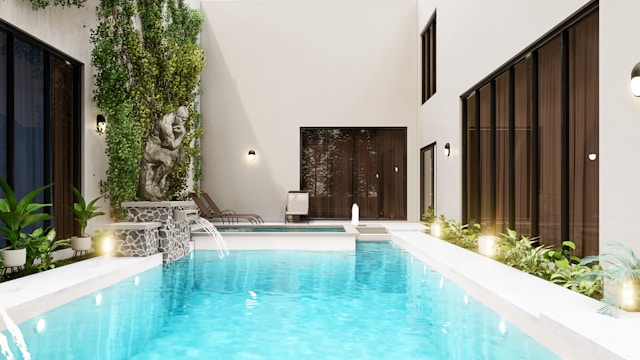
It starts off sounding pretty confident. The pool is new, the water’s crystal clear and the chlorinator’s ticking along in the background just fine. But then Summer finally rolls around, and somewhere around mid-January the water starts to turn this really unsettling shade of green. You add more chemicals, turn the chlorinator up a bit, but the water just keeps on looking green. By the time a technician is called, the pool owner’s blown a small fortune on chemicals and still hasn’t figured out what’s really going on. It’s a story that plays out all too often across Port Kennedy, Rockingham, and those southern suburbs, the standard first season hobble for new pool owners who didn’t know what they were getting themselves into.
Pool Chemistry Isn’t Just About Chucking Chlorine In Until The Water Looks Right
Pool water balance is about getting a whole bunch of variables just right: pH, total alkalinity, calcium hardness, cyanuric acid (that’s the stabiliser), and free chlorine. And you can’t just adjust one of these things without messing with the others, just adding loads of chlorine to water that’s all out of whack doesn’t really do much. WA’s water supply is pretty hard, as it is all the way from Rockingham to Mandurah, which means that in a new pool fill, calcium hardness is already running a bit high. Not paying attention to that is a pretty common cause of calcium scaling on pool surfaces and equipment the first year round, and reversing that kind of damage can be a big job, and expensive too. And free chlorine only really works as a sanitiser if the pH is just right, which is generally between 7.2 and 7.6. A pool that’s got a pH of 7.8 and is way too high might look like it’s got enough chlorine, but the chlorine is probably just about useless so far as keeping algae under control is concerned, because it’s just not doing the job.
What A Salt Chlorinator Actually Does And Doesn’t Do
A salt chlorinator takes all the dissolved sodium chloride in the pool water and turns it into hypochlorous acid, that’s the part that actually does the sanitising. But a lot of new pool owners assume it means they don’t need to worry about getting all the other chemical levels just so, pH, alkalinity, stabiliser levels, and that’s where things start to go wrong. No, a salt chlorinator doesn’t wave a magic wand and sort out all the other stuff, you still need to test and adjust all those levels, and all the time. And if you’re not careful, you’ll end up with a setting that’s just fine for a mild Rockingham winter, but completely inadequate for the hot summer months when the sun is beating down and there are loads more people in the pool. And then there’s the salt cell in the chlorinator itself, that’s got a limited lifespan, usually around 5,000 to 10,000 hours. When that gets clogged up with calcium scales, it’s just not going to do the job properly any more, and that’s the leading cause of premature failure in WA’s hard water. Still, a lot of new pool owners just add more salt when the warning light comes on, without bothering to check, which is only going to make things worse.
Green Water Is Not The Cause But Merely A Symptom
Algae blooms are the source of green water and can be a result of low free chlorine level, high pH and insufficient filtration run time; all three should be resolved at once for proper treatment. Shocking is needed to treat such blooms by raising free chlorine levels several times higher than the maintenance levels. Shocking with only one bag of product is not the procedure and even when done successfully, the underlying imbalances in filtration run time and chemistry have to be addressed, or the pool will become green again in a matter of weeks. Elevated phosphate levels, introduced through rainwater, leaves and some pool products, serve as fertilizer for algae growth. It is rare for pool owners in their first years to check for phosphates but in the presence of high phosphate levels, even with plenty of chlorine, algae control becomes very challenging.
Most Problems Occur Because Of Reduced Equipment Run Time
It is recommended to hire a service provider like PK Pool and Spa Care or run the circulation pump in WA summers for at least 8 hours per day; some pool owners try to save on electricity and shorten the run time which results in low water clarity and inability to manage the problem chemically. Cartridge filters require more frequent cleanings than sand or glass media filters, which are also less common nowadays in Rockingham and Port Kennedy. Pump basket has to be cleaned every week during peak periods of usage. Heat pumps, popular in this region because they extend the swimming season, require different maintenance procedures from the rest of the pool circulation system, being a separate piece of equipment.
The Pre-Purchase Pool Inspection Is Cheaper Than What It Reveals
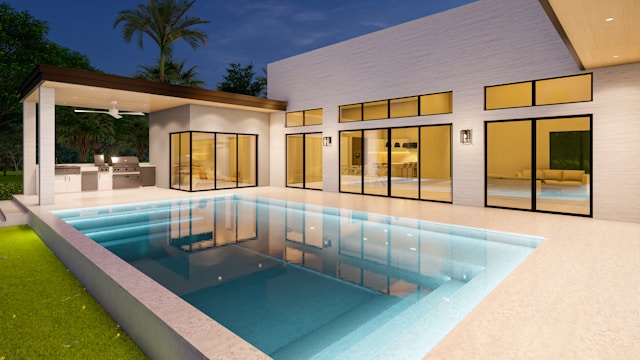
Most houses with a pool in this region were built prior to 2010, which means that equipment in such pools is usually near or beyond end of its life. Pre-purchase inspection includes checking for the condition of the equipment and water chemistry, as well as the pool structure for any signs of cracking and pavement movement, and safety barriers’ compliance. According to WA Building Act, owners of the pool are obliged to keep the barriers in compliance with regulations.